From the Playwright:
I am a descendant of Chief Justice Roger Brooke Taney. He is my fourth generation great uncle. I grew up knowing my last name was infamous. In school, I would shy away into my metal chair as we read the tiny blurb that covered the Dred Scott Decision in the corner of our text books. At holiday dinners, I sat in quiet observance as I listened to aunts and uncles debate their feelings on Taney both as a man, and as a lawmaker. I was regaled with his accomplishments, only then, to be shocked back into the horror of the words he wrote that have plagued our family’s moral conscience ever since. We carry a certain generational guilt. An inter-generational guilt that, over the years, has been worked through the family by vigorous debate, education and various artistic expressions.
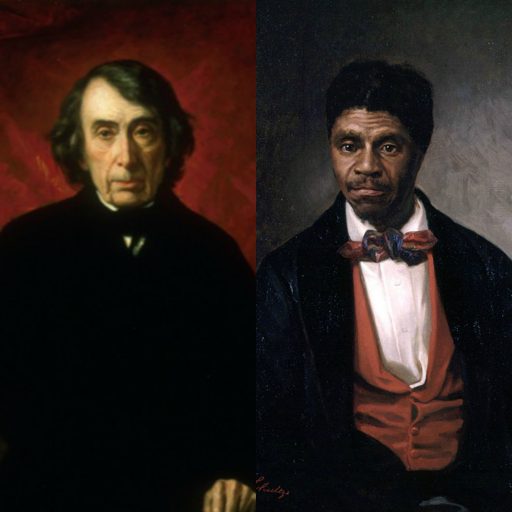
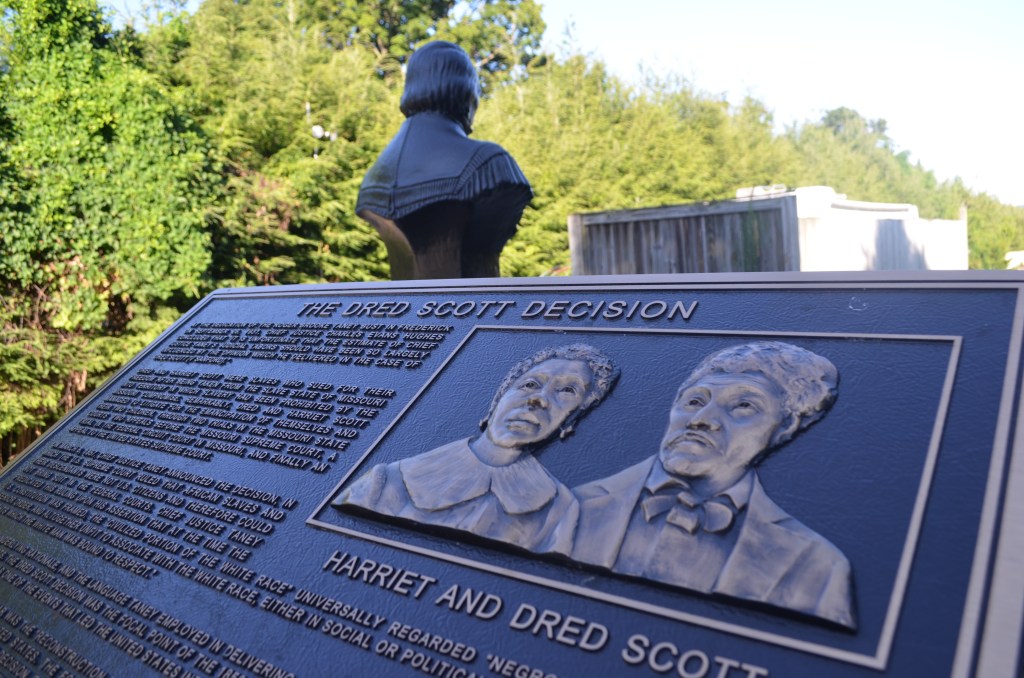
(Above, Chief Justice Roger Brooke Taney and Mr. Dred Scott)
As I grew into my own as an artist, I found myself confronted regularly with the stark historical truth of my own name but it wasn’t until I attended graduate school that I started to awaken to my own racial biases. I attended The Actors Studio Drama School at Pace University and two blocks away, at Zucotti Park, the Occupy Wall Street movement sprung up and the Black Lives Matter movement started to gain serious momentum. I would visit the park regularly. Most of my time there was spent in observation listening to the voices of the oppressed. I remember the countless think-tanks and radical ideas of my contemporaries. I felt enlivened, enraged and invested.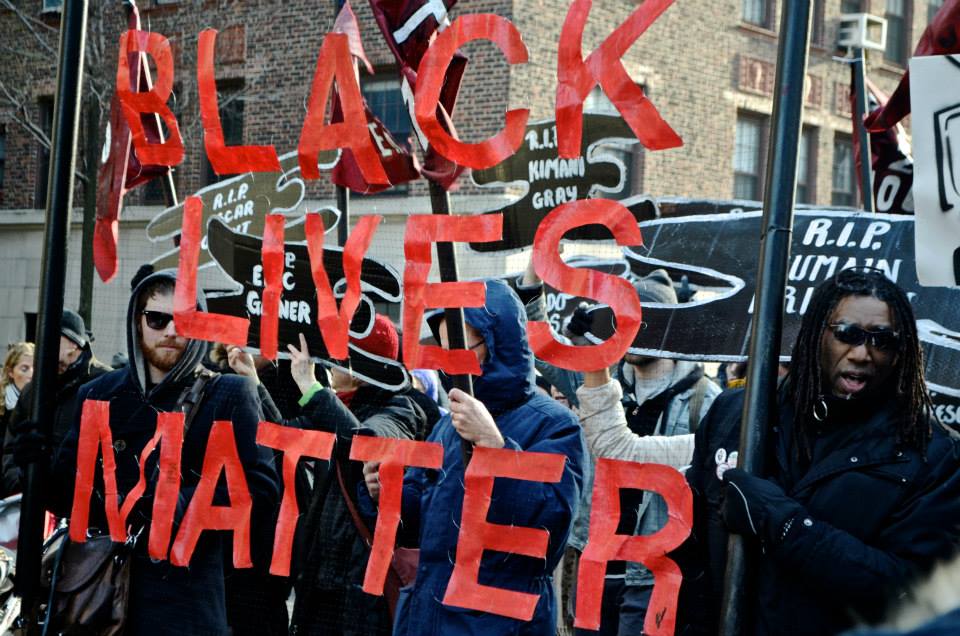
Around the same time, I was working on a character in school. Lula, from Amiri Baraka’s Dutchman. The character is the embodiment of white supremacy. The play takes place at the height of the civil rights era on a New York City subway. I am a method actor and this meant I had to traverse the landscape of my psyche and dive into uncomfortable and revolting places within myself. I worked on Lula for two years. This play gave me not only an education, but a greater perspective on the plight of Black people. American Rot, is heavily influenced by the genius of Amiri Baraka. 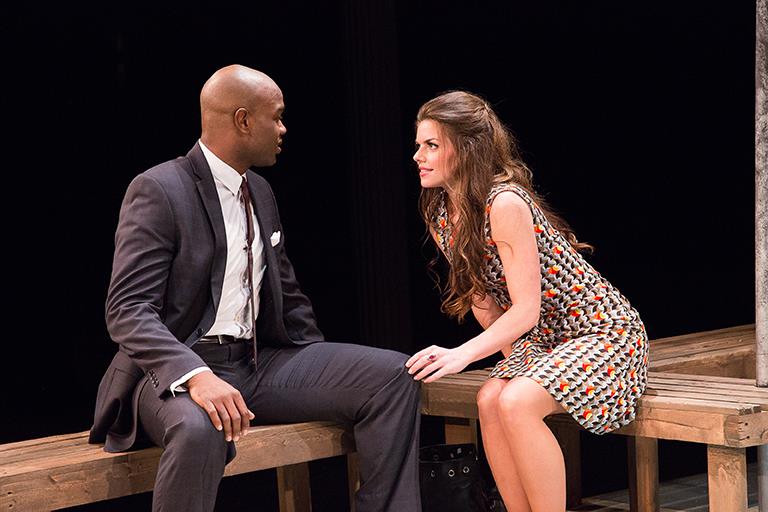
Pictured above from Left: Devin Tillman (Clay) and Kate Taney Billingsley (Lula) from Amiri Baraka’s ‘Dutchman’
I began to see for the first time, very clearly, the inescapable breadth of my white privilege and innate racism which I had either been ignorant of or repressed so deeply that the awakening to it struck a certain fire in my soul.
But, what does one do with all that privilege, guilt and inheritance? What does an artist do with it? Especially today. Protesting felt actionable, but not enough. I knew that in spite of my relentless guilt, I needed to put pen to paper. And so, I began the only way I know how to deal with any of my life’s issues; I began to write.
There was one conversation in particular that kept hounding me. A conversation I heard many times throughout my childhood and central dramatic question I needed to have answered: Should we apologize to the Scotts? It seemed split down the middle. Half thought “No way, we didn’t do anything. Why should we apologize? What would an apology even accomplish?” The other saying, “No, we didn’t write the decision, but we bear the name of the man who did, and this wrong should be made right somehow. Why not apologize? What is the harm?” So, why had it no happened?
In 2014, I began to write a fictional account about what would have happened if we did apologize. And my short play, a two-hander, A Man of His Time was born of it.
The Evolution
By the summer of 2015 I had a final draft of my One Act play, “A Man of His Time”. The story centers around two men, Walter Scott (a descendant of Dred Scott) and Jim Taney (a descendant of Roger Brooke Taney). Jim offers Walter an apology and Walter hands Jim an education as to why an apology alone just won’t cut it.
I submitted the play to a non-profit theatre company, Colors of Community. In August, 2015, a reading of the play was produced by Colors of Community at the MoCADA (Museum of Contemporary African Diasporan Art) in Brooklyn.
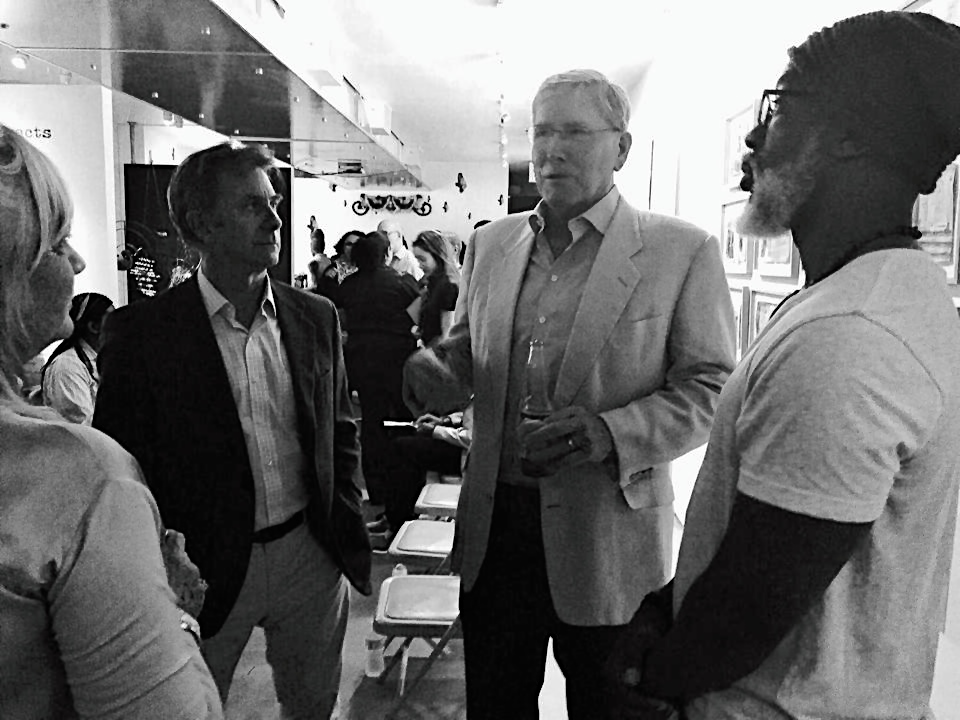 At the MoCADA, August 2015. Pictured above from Left to Right: Carol Taney (my mother), Robert Schorr (first Jim Taney), Charlie Taney (my father) and Jeorge Watson (first Walter Scott).
The experience with Colors of Community gave me the courage to send my play to the legendary Estelle Parsons, who was directing a Theatre for Social Justice Series at The Actors Studio the following spring. Estelle was interested in the play and wanted to see it read at The Actors Studio. We began to workshop the play in session at The Actors Studio with actors Jim DeMarse (Jim Taney) and Count Stovall (Walter Scott). In one Director’s Unit evening at the Studio, Artistic Director, Ellen Burstyn, suggested I reach out to the Scott family, inviting them to the show.
Per Ellen’s suggestion, I reached out to Lynne Jackson (the great-great granddaughter of Dred Scott and founder of The Dred Scott Heritage Foundation). I sent Ms. Jackson my play along with a note asking to speak with her. A few days later, Lynne called me and we two talked for nearly an hour. Lynne had been hoping to connect with a Taney for the past ten years since her organization’s inception.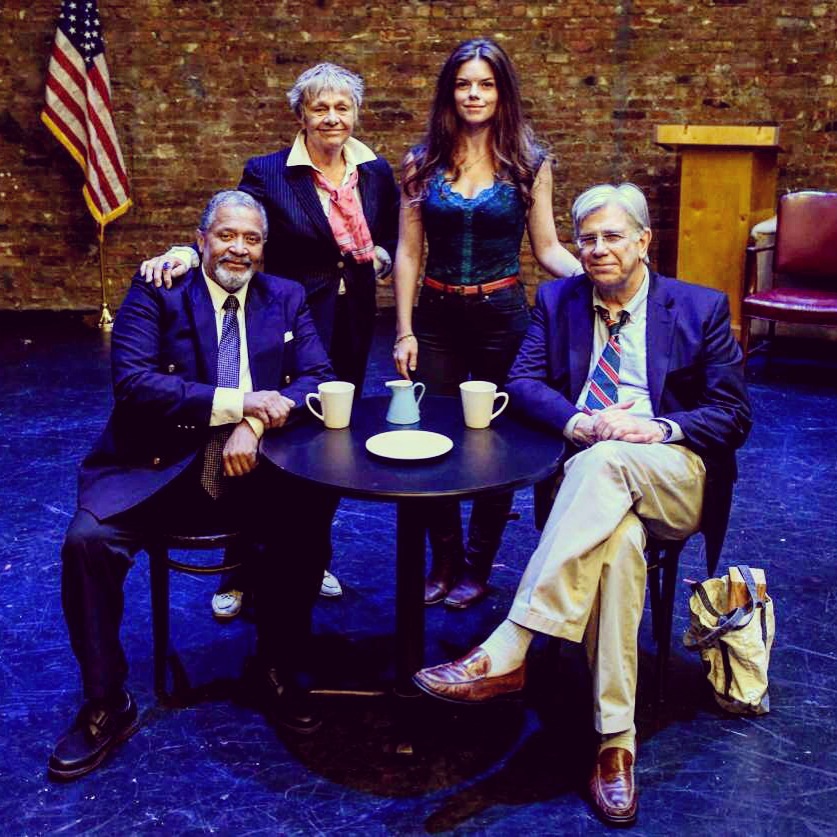 At the Actors Studio, May 2016. Pictured Left to Right: Count Stovall (Walter Scott), Estelle Parsons (director), Kate Taney Billingsley (playwright) and Jim DeMarse (Jim Taney). Credit: Greenwich Times
The Actors Studio brought Lynne to NYC to see the play and be a part of a talkback after the performances. After hearing of our Taney-Scott story, The New York Times wrote an article titled “A Fictional Apology to Dred Scott, Born of a Real Family’s Painful Legacy”. In May, 2016, Lynne Jackson flew to NYC to attend the play and talkback. The talkbacks after the show included myself, Lynne Jackson, Charlie Taney (my father) and Estelle Parsons as moderator. The room was electric. History was happening, life was imitating art. The conversations around race and reconciliation that followed the play were both passionate and dynamic.
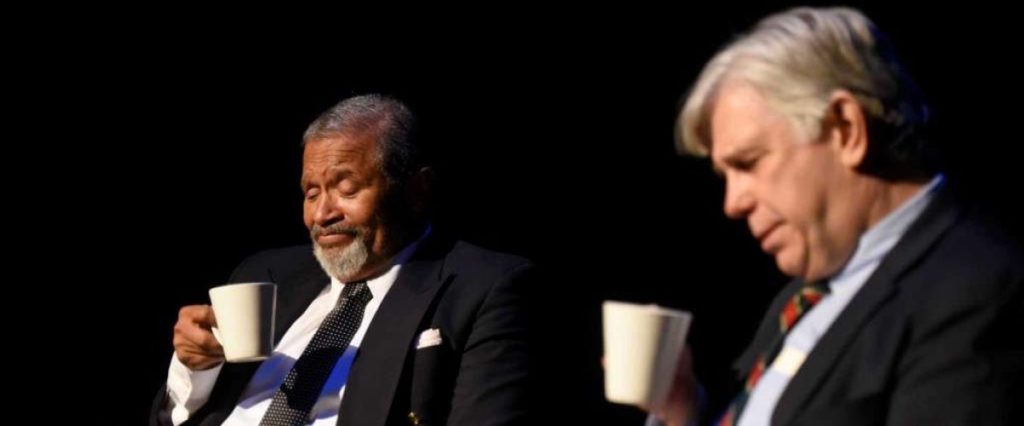
In November of 2016, A Man of His Time was produced by Playing On Air and recorded at The Jerome L. Greene Space at NPR. The play was directed again by, Estelle Parsons and starred Sam Waterston and John Douglas Thompson.
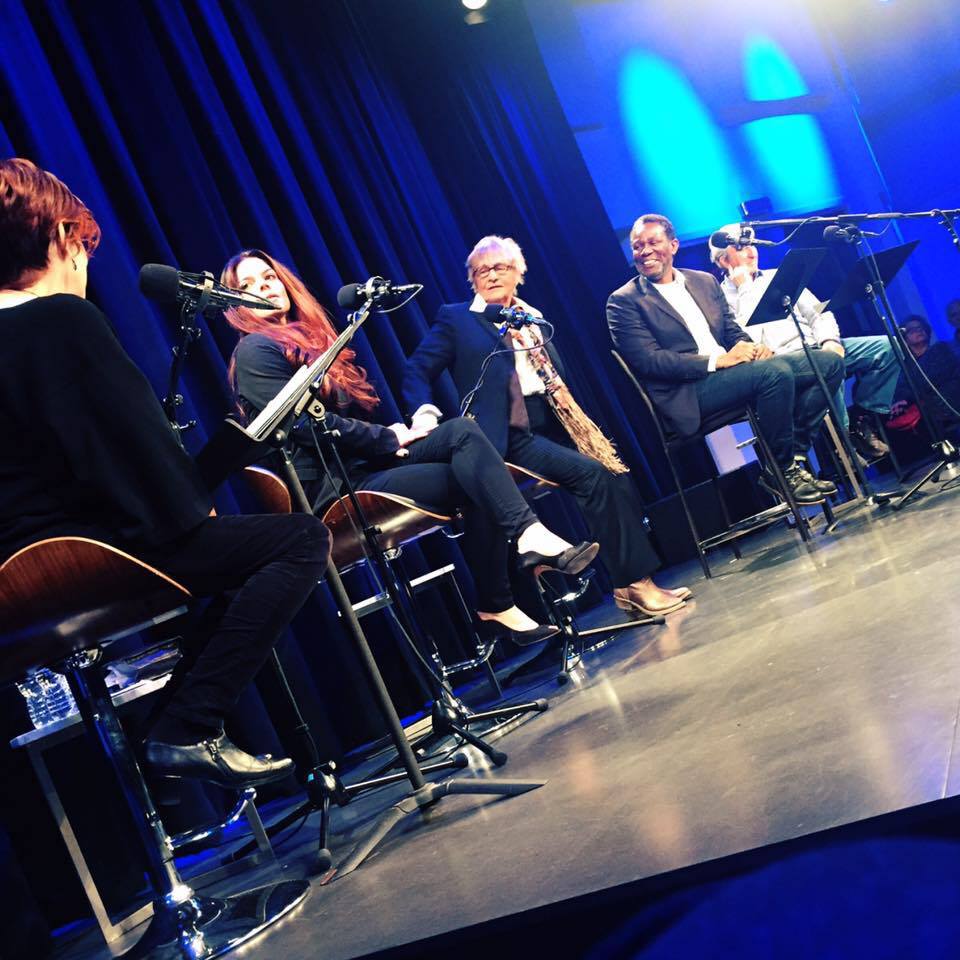 At NPR’s Jerome L. Greene Space, November 2016. Pictured above, Left to Right: Claudia Catania (Producer of Playing On Air), Kate Taney Billingsley (playwright), Estelle Parsons (director), John Douglas Thompson (Walter Scott) and Sam Waterston (Jim Taney).
The Real-Life Action
Almost immediately, my father began to work pro-bono with Lynne’s organization, The Dred Scott Heritage Foundation. He traveled to St. Louis in December of 2016 to take part in a reconciliation forum with descendants of Thomas Jefferson, Jefferson Davies, Dred Scott and Peter Blow. My father, Charlie Taney, has worked pro-bono with The Dred Scott Heritage Foundation on and off throughout the years. He also formed a grass roots movement with Black and white members of his church community in Connecticut called “Breaking Bread” where members of the church from different racial backgrounds have one another to dinner at their homes; in a hope to build trust and form new relationships.
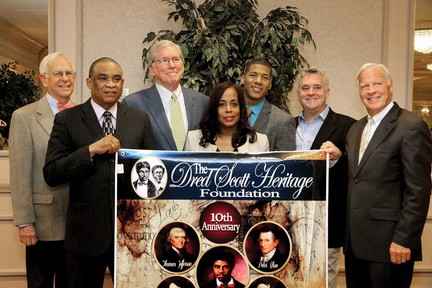
From left: John LeBourgeois, Pastor Sylvester Turner, Charlie Taney, Lynne Jackson, Shannon Lanier, Ashton LeBourgeois and Bertram Hayes Davis at the Dred Scott Heritage Foundation reconciliation event at the Hilton St. Louis Frontenac. photo by Diana Linsley
On March 6, 2017, the 160th anniversary of the Dred Scott Decision, I stood alongside my parents and Lynne Jackson as my father offered an apology on behalf of our family to the Scott family. We stood in front of Roger Brooke Taney’s statue (now dismantled), outside the Maryland State House, overlooking some of the first slave ports in America.
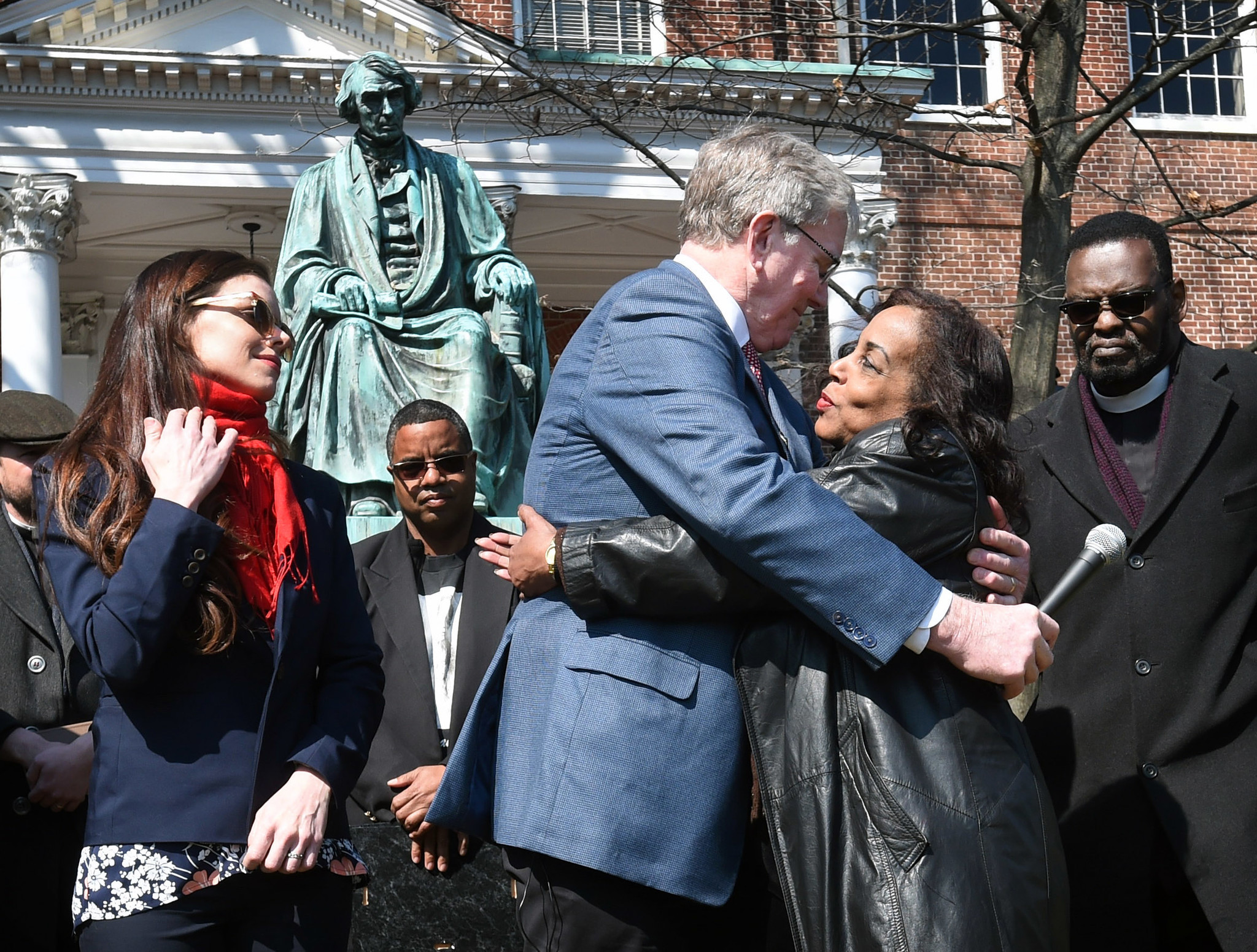
Annapolis, MD. 160th Anniversary of the Dred Scott decision. Pictured above from left: Kate Taney Billingsley, Alex Hailey, Charlie Taney, Lynne Jackson and Bishop Jackson.
The same day, A Man of His Time was read by local actors and activists Bill Hailey (descendant of Alex Hailey & playing Walter Scott) and Patrick Mulvaney (playing Jim Taney) before the President of the Annapolis Chapter of the NAACP, Steve Tillett, civil rights activist, Carl Snowden, Congresswoman Cheryl D. Glenn and others leaders in the community. After the performance of the play, we all headed to the Maryland House of Delegates and lobbied the Black Caucus to erect a statue of Dred Scott next to Taney of equal size and to create a place of education at the site of the statue so that we may learn from our past and so as to never repeat it. The Taney statues were taken down in 2017.
 Lynne Jackson (Great-great granddaughter of Dred Scott), Charles Taney (Roger Brooke Taney Descendant), Kate Billingsley (playwright – Taney Descendant), William Alexander Haley (Grandson Of Alex Haley author of “Roots”) and House Delegate Cheryl Glenn (Baltimore City) and others at Healing and Reconciliation Event on the 160th Anniversary of The Dred Scott decision March 6, 2017.
A More Formal Apology
There was the public gesture of reconciliation outside the Annapolis courthouse that gained national news headlines and then there was the more formal, serious and thoughtful apology that my father, inspired by my play, gave to Lynne Jackson and the Scott family in Missouri at Dred Scott’s Sons and Daughters of Reconciliation conference. NPR’s More Perfect has an episode in which this apology is featured. You can listen here:
https://www.wnycstudios.org/podcasts/radiolabmoreperfect/episodes/american-pendulum-ii-dred-scott
On the same day of the terror attack in Charlottesville, August 12th, 2017, A Man of His Time was read as part of the Freedom Festival in St. Louis, directed by Ron Himes of The Black Rep Theater in St. Louis, supported by the Missouri History Museum. I remember coming back to the hotel and turning on the television in horror and thinking “How will America survive?”
The Full- Length: AMERICAN ROT
I was inspired by John Douglas Thompson who played Walter in the Playing On Air iteration of A Man of His Time to write the full-length version of the play. His encouragement gave me the green light to keep writing. It was at this point that I realized I needed to speak less and listen more, and educate myself in a more serious way. I spent the summer of 2017 and winter of 2018 traveling and researching Taney and Scott. I visited where they lived and worked. I met with scholars, activists, lawyers, historians and I even had the honor to sit down with Justice Stephen Breyer.
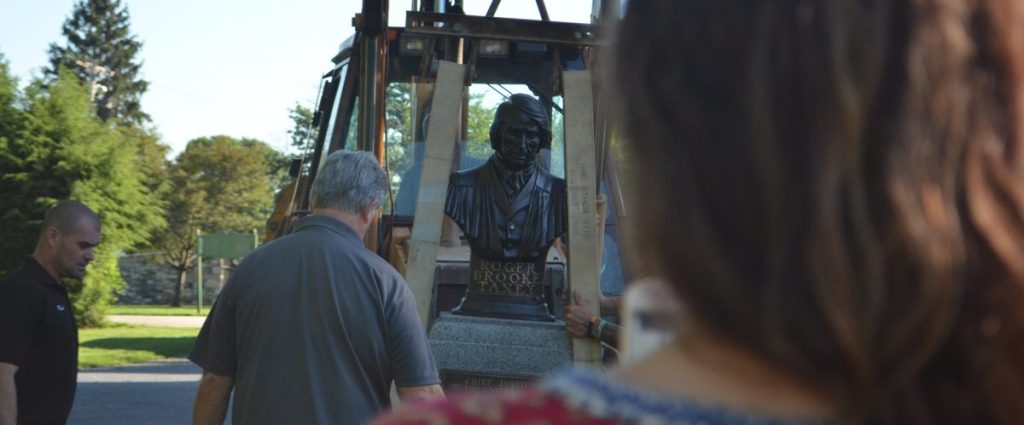
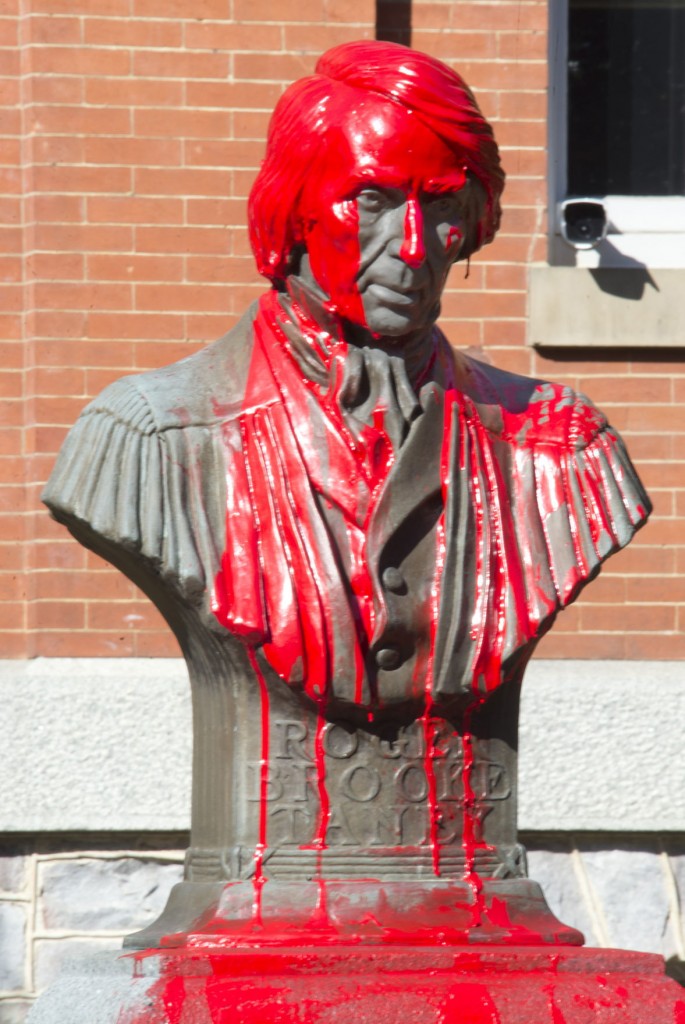
(Above, a photo of Roger B. Taney bust that had been moved from outside the Frederick Court House to a nearby cemetery in Frederick, MD. I happened to visit the same day they were moving the bust into its new place. This was one of the most surreal experiences of my life. )

(Above, Lynne Jackson and Kate Taney Billingsley at Fort Snelling, where Dred and Harriet Scott were enslaved in Free Territory).
My first draft was finished in the fall of 2019. I had added 12 characters and the play had taken on an entirely new shape, form and style with the two men, Jim and Walter still an the heart of the polemic. We had one reading of it at the Actors Studio before the pandemic hit. At the same time, I was newly pregnant and welcomed a son into the world in the summer of 2020. During the pandemic, Estelle Parsons and other creative folks were itching to work on something useful. We decided to produce a short film of A Man of His Time which won 2nd place in the Audience Choice Award for iWomanTV/NYWIFT Online Shorts Festival.
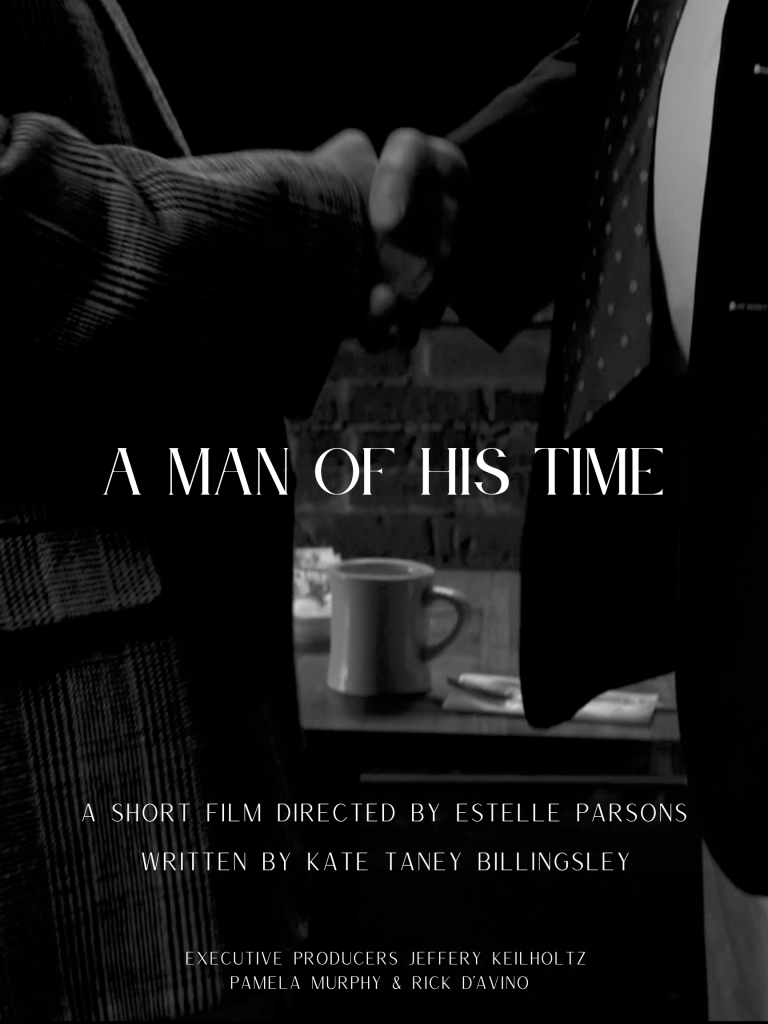
(Poster from A Man of His Time short film featuring Count Stovall as Walter Scott and Jim DeMarse as Jim Taney.)
In the fall of 2022, we started to workshop American Rot at the Actors Studio. Dozens of actors have helped to shape and inspire this play. It would not be the play it is without their time, talent and total dedication to the piece.
In the summer of 2023, we took the play to New Hampshire at The Village Players, where we worked for 8 days in an intensive workshop to finalize the play. We received the following feedback from theater-goers in Wolfeboro:
“The play is strong stuff and ambitious but it takes on the challenge with enough dark humor and absurdity to keep the audience on board for the trip. Kind of reminded me of a good old protest song that relies on poetry to avoid oversimplifying the ways of the world. I’ve given a lot of thought to how the country can survive with people drawing from separate and distinct narratives to represent their core values and political sides. Seems like artistic confrontation (from either/both sides) is more effective than debate because it can take the heart where the head will not go.” – Rick Broussard, Former Editor of New Hampshire Magazine
“The play needs to get to less liberal, racially-sensitive audiences. Having said that, feel free to quote me saying that this play needs to be seen by those who are not typical expensive-theater ticket purchasers.” – Warren Muir, former Executive Director of Science, National Academies of Sciences, Engineering and Medicine
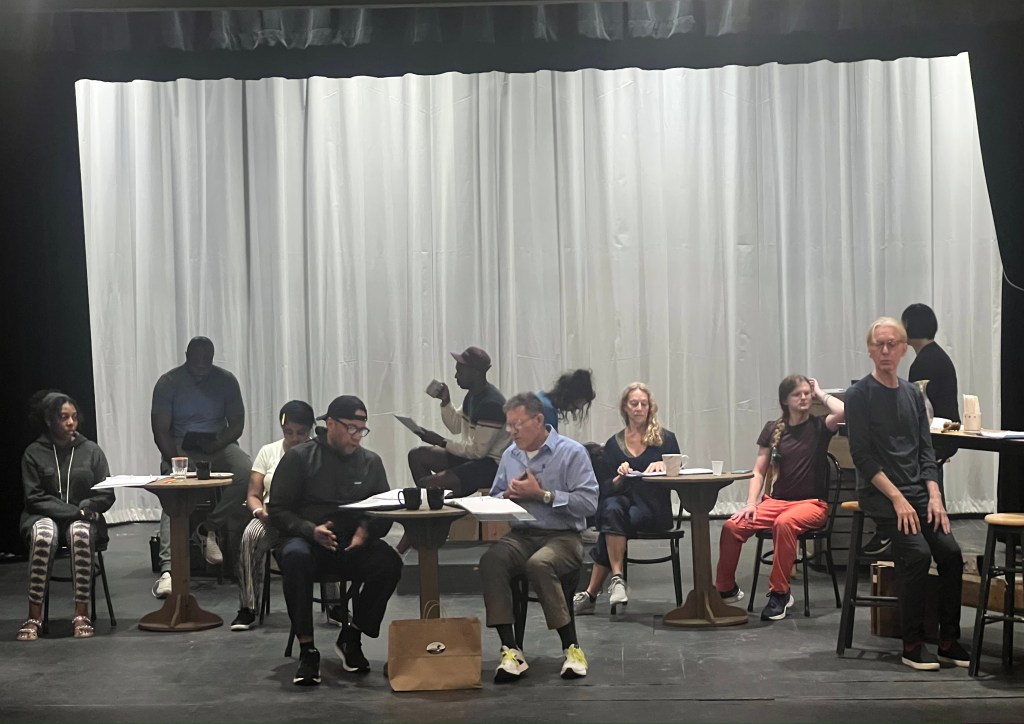
(At The Village Players in workshop for AMERICAN ROT. Actors featured: Brittaney Chatman, Eliott Johnson, Richarda Abrams, Marcus Naylor, Lawrence Stallings, Christian Baskous, April Aberdeen, Myla Pitt, Max Gehring, Timothy Doyle and Josh Brown).
La MaMa
American Rot is now set for production at La MaMa Experimental Theater Club March 14-31, 2024. Estelle Parsons, at 96, leads us in Direction. We hope to see you there!
Kate Taney Billingsley
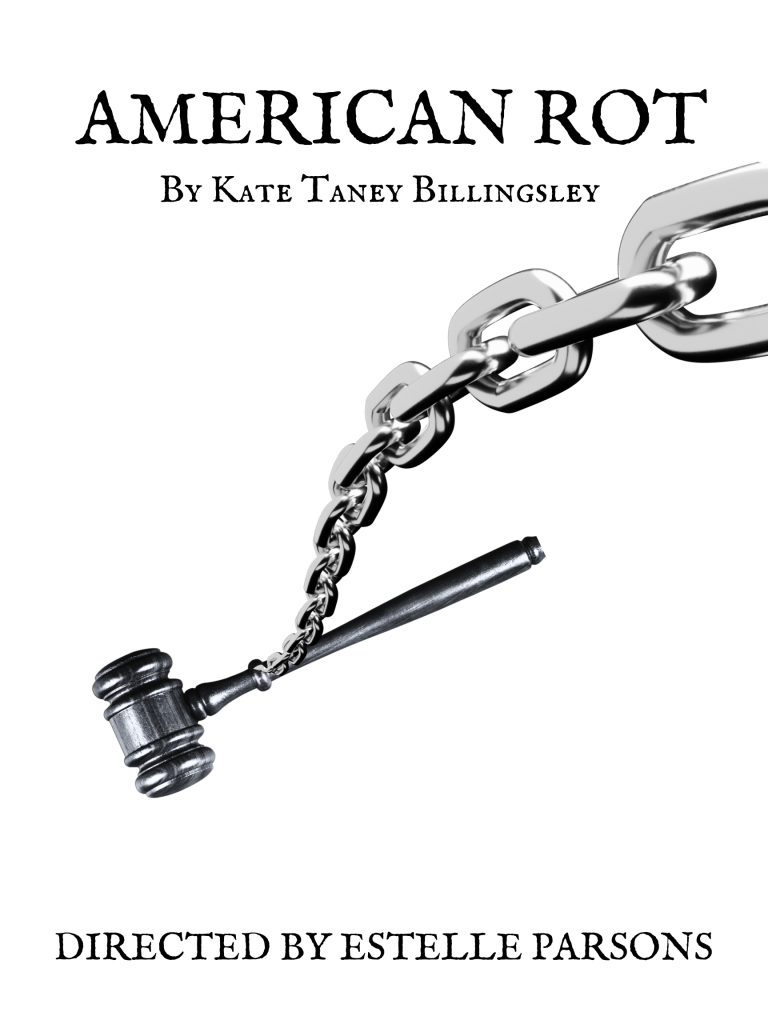
 AMERICAN ROT